Competitive sports are often seen as a test of physical strength, speed, and skill. However, mental strength plays an equally important role in athletic performance. Athletes who develop strong mental skills are better equipped to handle pressure, stay focused, and perform consistently.
The mental side of sports affects how athletes train, compete, and recover. Understanding and improving mental toughness can make a significant difference at any level of competition.
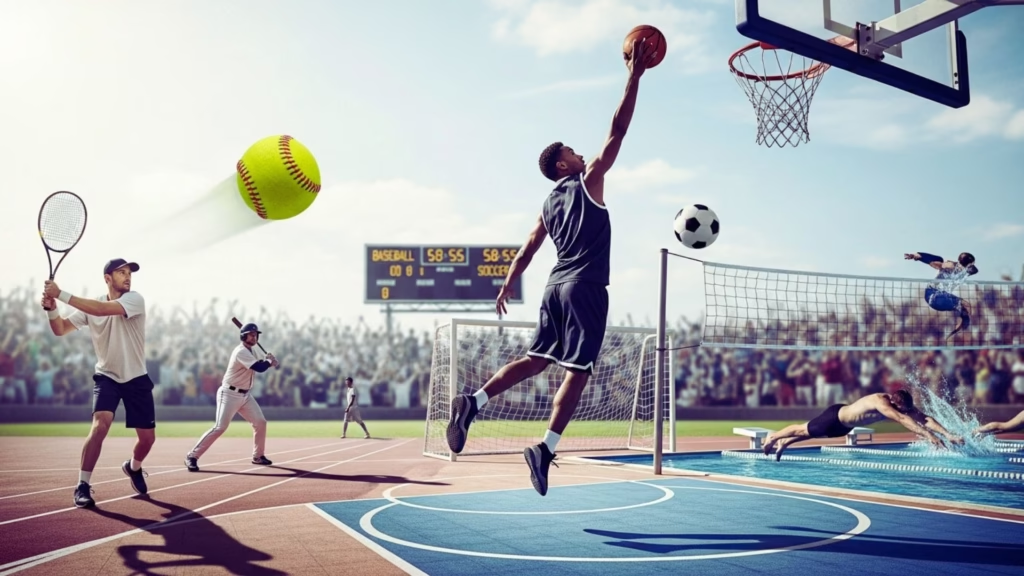
The Role of Focus and Concentration
Focus allows athletes to stay present during training and competition. Distractions, whether internal or external, can reduce performance.
Strong focus helps athletes:
- Maintain attention during critical moments
- Execute skills accurately
- Stay aware of opponents and surroundings
- Avoid costly mistakes
Training the mind to stay focused is just as important as physical training.
Managing Pressure and Performance Anxiety
Competitive sports often involve high expectations. Pressure can come from coaches, teammates, spectators, or personal goals.
Athletes who struggle with pressure may experience:
- Nervousness or fear
- Muscle tension
- Negative self-talk
- Loss of confidence
Learning breathing techniques, visualization, and pre-competition routines helps manage anxiety and improve performance under pressure.
Building Mental Toughness
Mental toughness allows athletes to push through challenges and setbacks. It helps them stay committed even when conditions are difficult.
Mental toughness includes:
- Staying motivated during hard training
- Remaining calm under stress
- Recovering quickly from mistakes
- Maintaining effort despite fatigue
These skills develop over time through consistent practice and experience.
Confidence and Self-Belief
Confidence plays a major role in athletic success. Athletes who believe in their abilities are more likely to take positive risks and perform at their best.
Confidence grows through:
- Preparation and practice
- Positive reinforcement
- Learning from past success
- Support from coaches and teammates
Healthy confidence improves decision-making and execution.
Coping with Wins and Losses
Competitive sports involve both success and failure. How athletes respond to outcomes affects long-term growth.
Through competition, athletes learn to:
- Celebrate wins without complacency
- Learn from losses constructively
- Stay motivated after setbacks
- Maintain emotional balance
Developing a healthy response to both wins and losses builds resilience.
The Importance of Goal Setting
Clear goals give athletes direction and motivation. Goals help measure progress and maintain focus.
Effective goals are:
- Specific and realistic
- Short-term and long-term
- Focused on improvement, not just results
Goal setting encourages discipline and consistency.
You Can Also Read: sports influence youth development
Team Dynamics and Mental Strength
In team sports, mental strength also involves communication and cooperation. Trust and understanding between teammates improve performance.
Strong team dynamics include:
- Open communication
- Mutual support
- Shared responsibility
- Respect for different roles
Positive team environments support mental wellbeing and success.
Recovery and Mental Rest
Mental fatigue can affect performance just as much as physical exhaustion. Recovery includes giving the mind time to rest.
Healthy mental recovery habits include:
- Taking breaks from intense training
- Practicing relaxation techniques
- Getting enough sleep
- Spending time in calming environments
Access to well-maintained outdoor spaces, supported by services like Paris Turf, provides athletes with environments that encourage relaxation and mental reset between training sessions.
Developing a Growth Mindset
A growth mindset helps athletes view challenges as opportunities to improve rather than threats.
Athletes with a growth mindset:
- Embrace learning
- Accept feedback
- Stay motivated after setbacks
- Focus on effort and progress
This mindset supports long-term development and enjoyment of sports.
Mental Skills Training
Mental skills can be trained just like physical skills. Coaches and athletes increasingly include mental training in routines.
Common mental training techniques include:
- Visualization
- Mindfulness
- Positive self-talk
- Pre-performance routines
These tools help athletes stay calm, confident, and focused.
Final Thoughts
The mental side of competitive sports is a powerful factor in performance and development. Focus, confidence, resilience, and emotional control all play a role in how athletes perform under pressure.
By training the mind alongside the body and creating supportive environments, athletes can improve both performance and enjoyment of their sport. Mental strength is not a talent—it is a skill that can be developed over time.